
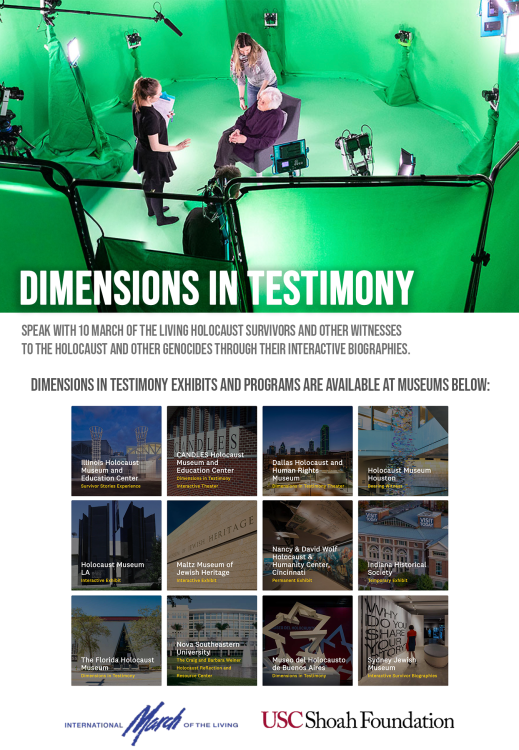
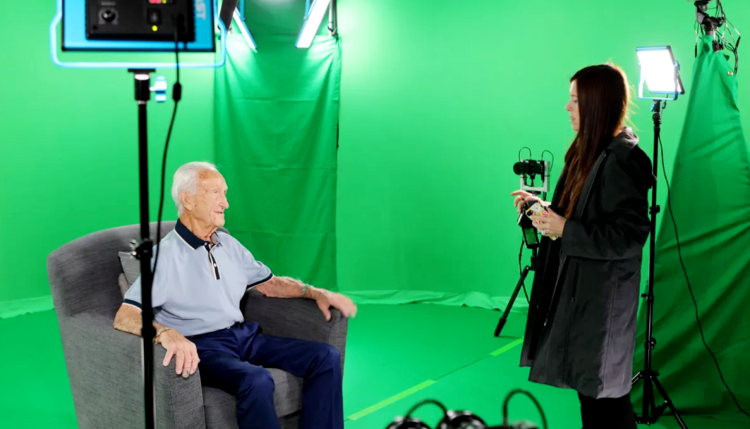
In 2014, USC Shoah Foundation launched its first Dimensions in Testimony interview with Holocaust survivor Pinchas Gutter. This technology brings survivor testimony to life in an entirely new way, enabling real-time conversations with pre-recorded, 3D interviews of Holocaust survivors. individuals of all ages interact by asking questions to Holocaust survivors today, with technology that will be savable for generations to come, after the last Holocaust survivor has passed away.
This pioneering work builds on USC Shoah Foundation’s mission to preserve first-hand accounts of genocide and to combat hatred, prejudice, and indifference through education. Through Dimensions in Testimony, survivor voices remain active participants in Holocaust education: visitors can ask their own questions and receive thoughtful, authentic answers drawn from hours of carefully recorded responses. These experiences are accessible in museums and educational settings around the world and, in some cases, through the Foundation’s IWitness platform for classrooms.
Of the 66 interviews filmed for this initiative, 10 are of March of the Living survivor/educators:
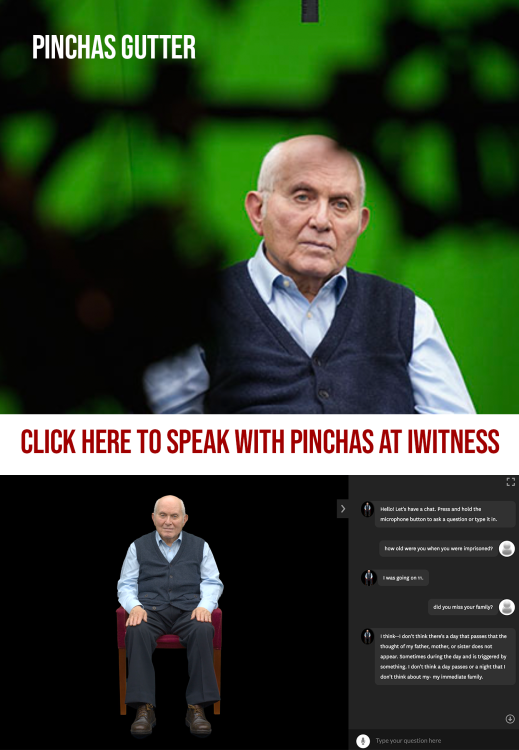
Max Eisen, Kuba Enoch, Fritzie Weiss Fritzhall, Max Glauben, Pinchas Gutter, Agnes Kaposi, Ed Mosberg, Fania Wedro, Sara Rus, & David Schaecter. Two interviews with March of the Living survivors & educators, Max Eisen & Pinchas Gutter, are currently available online, where you can interact with and ask questions of each survivor.
Click here to experience Dimensions in Testimony ⧉
Dimensions in Testimony features 10 MOTL Holocaust Survivors
Pinchas Gutter was born to a Hasidic family in Lodz, Poland, on July 21, 1932. Alongside his twin sister Sabina, he grew up in a religious Jewish community. Within a month of the Nazis’ 1939 invasion of Poland, the Gutter family, under false Christian identity, moved to Warsaw to avoid danger in their hometown. The family was interned in the Warsaw Ghetto, where they hid in a bunker during the April 1943 Warsaw Ghetto Uprising.
They were eventually discovered and deported to the Majdanek concentration camp, where Pinchas’ parents and sister were murdered. Pinchas was then transferred to forced labour camps in Skarzysko-Kamienna and Tschenstochau-Rakow, Poland and later to the Buchenwald and Colditz concentration camps in Germany. From Colditz, he was sent on a death march to the Theresienstadt ghetto in Czechoslovakia (now the Czech Republic).
Pinchas was liberated from Theresienstadt by the Red Army in May 1945. After the war, Pinchas lived briefly in the United Kingdom, where he married his wife, Dorothy, and then in Israel, before settling in South Africa for many years. He then immigrated to Canada in 1985, where he served as a lay chaplain at the Baycrest Jewish Home for the Aged in Toronto and as an honorary cantor at his local congregation.
Pinchas and his wife had three children and three grandchildren. Pinchas’ story became the film Political, Polish Jew: The Story of Pinchas Gutter. In April 2014, he was also the inaugural participant in USC Shoah Foundation’s Dimensions in Testimony project. Pinchas was first interviewed by USC Shoah Foundation in Toronto, Canada on January 12, 1995, and subsequently interviewed again by The Azrieli Foundation in Toronto on July 12, 2017.
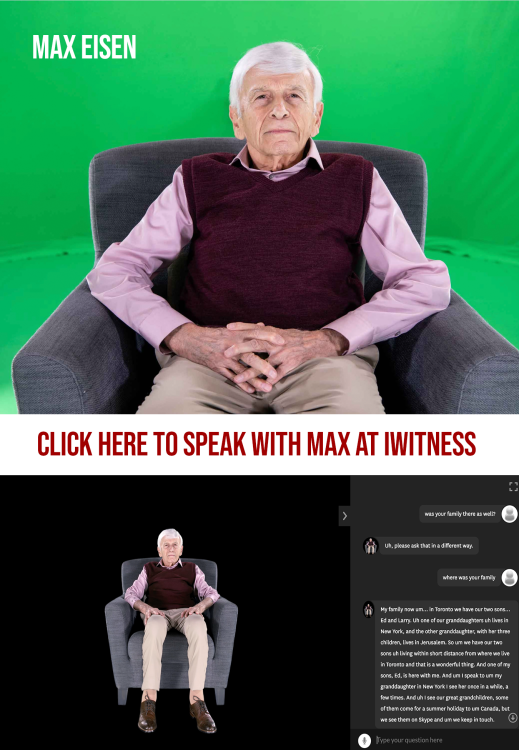
Max Eisen CM (1929-2022) was born on March 15, 1929, in Moldava nad Bodvou, Czechoslovakia (now Slovakia), to Zoltan and Ethel Eisen. He grew up in an Orthodox Jewish family alongside two younger brothers, Eugene and Alfred. His father was a distiller and pub owner, and the extended family lived together on the grounds of his grandfather’s lumber yard. Max attended public school and Talmud Torah, where he learned Jewish traditions and values.
In 1939, Hungarian forces occupied Moldava nad Bodvou, and anti-Jewish laws were quickly imposed. Jewish men, including Max’s father, grandfather, and uncle, were sent to forced labor. In April 1944, during Passover, the Jewish families of the town were rounded up and deported to a ghetto in Košice, and soon after to Auschwitz-Birkenau. Upon arrival, Max’s mother and younger siblings were murdered. Max survived by lying about his age, claiming to be nineteen, and was spared immediate death.
Max remained with his father and uncle in Auschwitz, concealing their family connection from the guards. They protected him, shared food, and gave him guidance that sustained him. Before being killed, Max’s father secretly passed him a small prayer book and told him never to forget his Jewish identity. Weeks later, Max was severely beaten by an SS guard and hospitalized. He was saved when a Polish resistance doctor assigned him to work as a hospital cleaner, sparing him from execution.
In January 1945, Max was forced on a death march to Mauthausen and later transferred to its subcamps, Melk and Ebensee. After weeks without food or water, he was liberated at Ebensee by the U.S. Army on May 6, 1945.
After the war, Max lived in an orphanage and yeshiva before immigrating to Canada in 1949. He built a new life, married Ivy Cosman, and raised a family. A dedicated Holocaust educator, Max shared his testimony worldwide and participated in advanced projects involving survivor testimony. He passed away in July 2022 at age 93, leaving behind children, grandchildren, and great-grandchildren, as well as a powerful legacy of remembrance and resilience.
These 8 MOTL Dimensions In Testimony are accessible in person at local museums and educational institutions globally.
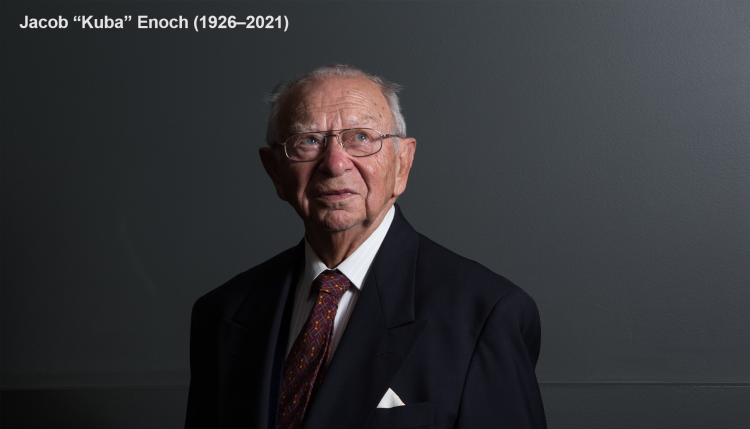
Kuba Enoch
Jacob “Kuba” Enoch (1926–2021) was a Holocaust survivor who later lived in Sydney, Australia. Born in Kraków, Poland, he endured the Kraków ghetto and survived multiple camps, including Plaszów, Auschwitz-Birkenau, and Buchenwald, as well as a death march, before being liberated on April 11, 1945. After the war, he settled in Australia, where he built a life with his wife Kitty and raised a family of four children, eleven grandchildren, and ten great-grandchildren. His testimony is preserved through USC Shoah Foundation’s Dimensions in Testimony project.
Click to read DIT Bios ⧉
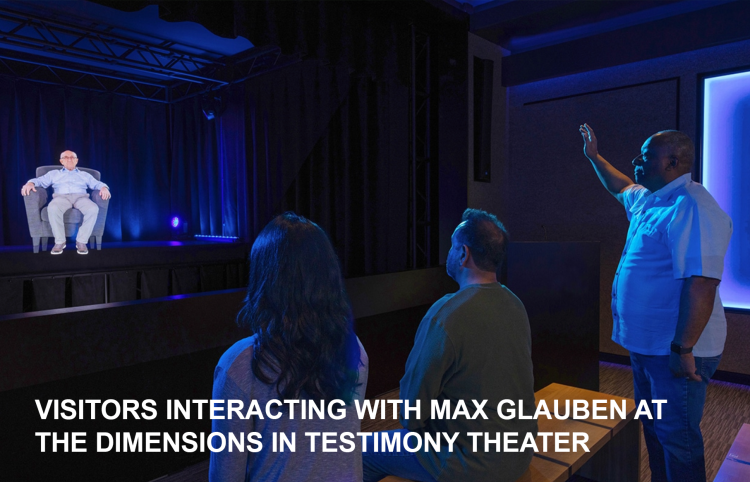
Max Glauben
Max Glauben (1930–2022) was a Holocaust survivor whose Dimensions in Testimony interview was recorded in English in 2018 in association with the Dallas Holocaust and Human Rights Museum. Born Moniek Glauben in Warsaw, Poland, he survived the Warsaw Ghetto, Majdanek, forced labor in multiple camps, and a death march from Flossenbürg before being liberated by the U.S. Army in 1945. After the war, he immigrated to the United States, served in the U.S. Army, and settled in Dallas, Texas, where he raised a family and built a new life.
Click to read DIT Bios ⧉
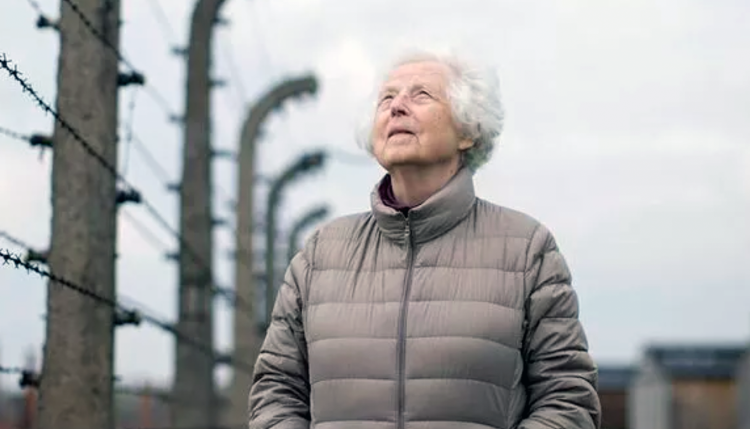
Agnes Kaposi
Agnes Kaposi was interviewed in Hungarian in 2021 in London, UK. Born in 1932 in Debrecen, Hungary, she survived ghettoization, deportation, and forced labor after being sent with her family toward Auschwitz in 1944, a transport that was diverted to Strasshof near Vienna. Liberated in April 1945, she later escaped Hungary following the 1956 Uprising and settled in the United Kingdom. Agnes became an electrical engineer, academic, and author, and is a Fellow of the Royal Academy of Engineering and a grandmother of five.
Click to read DIT Bios ⧉
Ed Mosberg
Ed Mosberg (1926–2022) was interviewed in English in 2018 for Dimensions in Testimony. Born in Kraków, Poland, he survived the Kraków ghetto and imprisonment in Plaszów under Amon Göth, as well as deportation to Mauthausen and Linz, where he was liberated in 1945. After the war, he immigrated to the United States, settled in New Jersey, and built a life with his wife, Cecile and their family.
Click to read DIT Bios ⧉
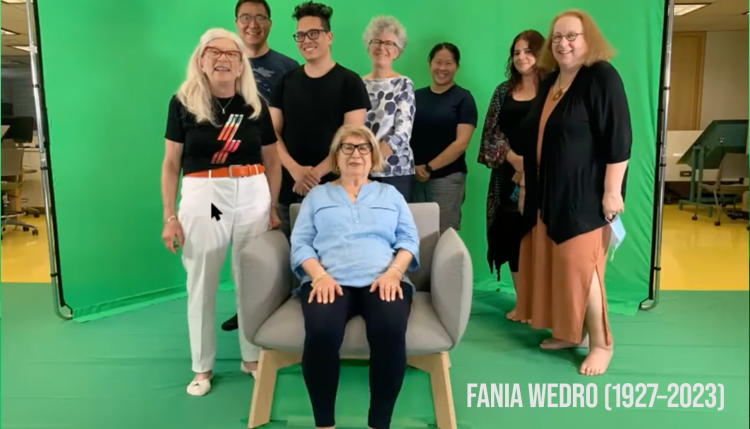
Fania Wedro
Fania Wedro (1927–2023) was interviewed in English in 2021 in Toronto, Canada. Born in Korzec, Poland (now Ukraine), she survived the murder of her family, the Korzec ghetto, and nearly two years in hiding in forests and villages before being liberated by the Soviet Army in 1944. After the war, she immigrated to Canada, settled in Alberta with her husband Leo, raised a family, and remained committed to sharing her Holocaust testimony and humanitarian work until her passing.
Click to read DIT Bios ⧉
Sara Rus
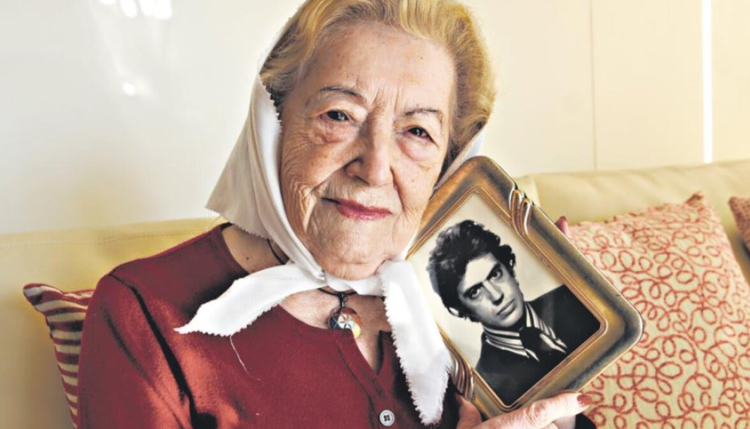
Sara Rus (1927–2024) was interviewed in Spanish in 2019 in association with the Museo del Holocausto in Buenos Aires. Born in Łódź, Poland, she survived the Łódź ghetto, Auschwitz-Birkenau, forced labour in Germany, and liberation from Mauthausen in 1945. After the war, she immigrated to Argentina with her husband, Bernardo, where she raised a family and dedicated her life to sharing her testimony until her passing at age 96.
Click to read DIT Bios ⧉
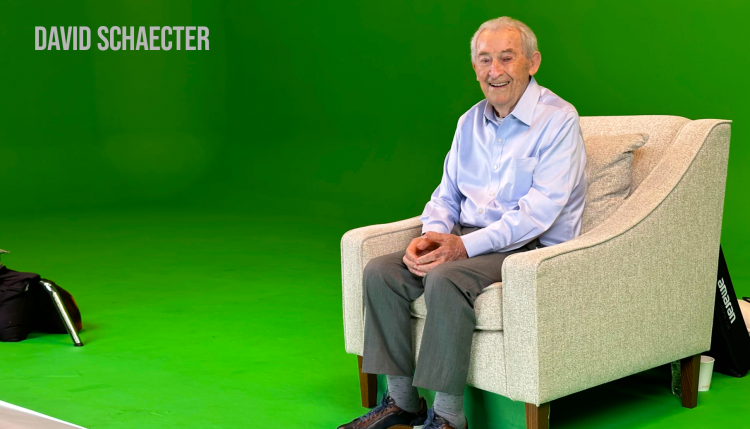
David Schaecter
David Schaecter (1929-2025) was interviewed in English in 2023 in association with the Holocaust Legacy Foundation in Miami. Born in Slovakia, he survived Auschwitz, Buchenwald, and a transport to Regensburg, escaping after a train bombing and joining Czech resistance fighters until the war’s end. After immigrating to the United States, he settled in Miami, built a career in industrial engineering, and raised a family.
Click to read DIT Bios ⧉
Fritzie Weiss Fritzshall
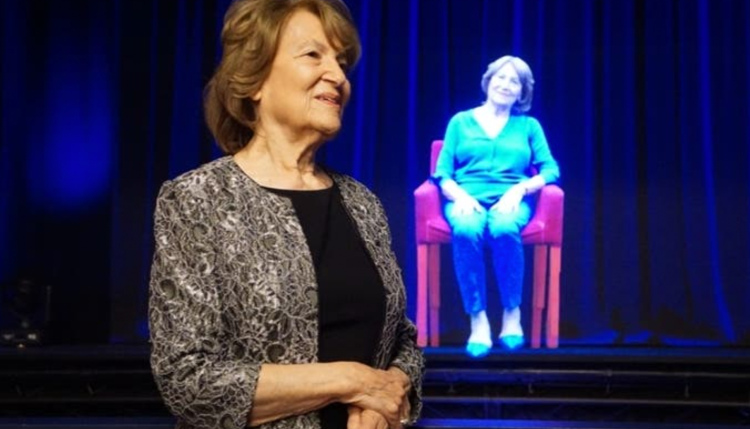
Fritzie Weiss Fritzshall was interviewed in English in 2015 in association with the Illinois Holocaust Museum and Education Center. Born in Czechoslovakia, she survived the Auschwitz-Birkenau camp, forced labor, and a death march, escaping before being liberated in 1945. After immigrating to the United States, she settled in Chicago, where she built a life with her husband, Norman Fritzshall and later served as President of the Illinois Holocaust Museum and Education Center.