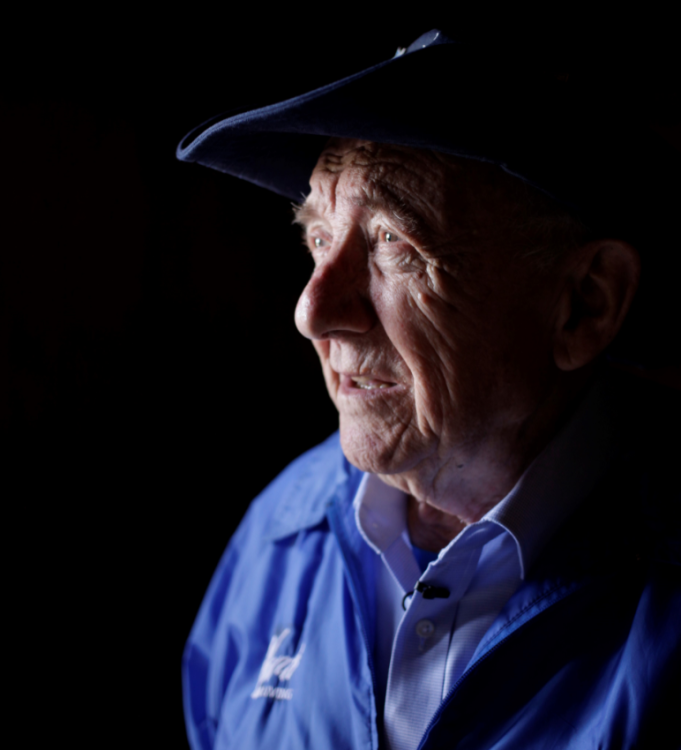
Max Glauben z”l survived the Warsaw Ghetto, Majdanek, Budzyn, Mielec, Wieliczka, Flossenbürg, and a death march before becoming a Holocaust educator, March of the Living witness, and co-founder of the Dallas Holocaust and Human Rights Museum.
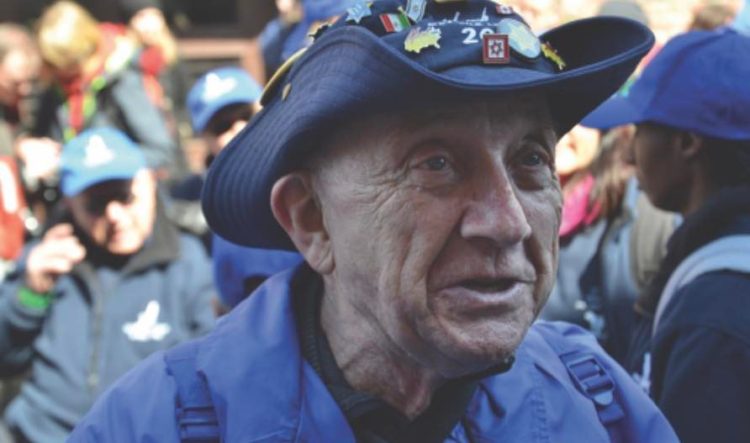
Holocaust Survivor, Educator, Museum Founder, and March of the Living Witness
Max Glauben z”l was born Moniek Mendel Glauben on January 14, 1928, in Warsaw, Poland, to Faiga and Isaak Glauben. He grew up with his younger brother, Heniek, in a Jewish family in Warsaw. His father was connected to a Yiddish newspaper, and Max attended Hebrew school until 1939, when Nazi Germany invaded Poland and destroyed the world of his childhood.
After the Germans occupied Warsaw, Max and his family were forced into the Warsaw Ghetto. They lived there for approximately two and a half years under conditions of hunger, disease, overcrowding, and constant danger. During the ghetto years, Max helped smuggle food and other necessities to support his family. When the Warsaw Ghetto Uprising began in April 1943, Max and his family hid in bunkers and basements as the Nazis burned and destroyed the ghetto.
After the defeat of the Warsaw Ghetto Uprising in May 1943, the Glauben family was deported by boxcar to Majdanek, the Nazi death camp near Lublin. There, Max’s mother, Faiga, and younger brother, Heniek, were murdered. Max and his father were selected for slave labour and sent to Budzyn, where they were forced to work in an airplane factory.
At Budzyn, Max’s father was murdered in retaliation after German overseers claimed that prisoners were missing. Max was left an orphan. He survived in part because he was mechanically skilled and could be used for labour. After Budzyn, he was moved through other forced labour and concentration camps, including Mielec, Wieliczka, and Flossenbürg.
In April 1945, Max and other prisoners were loaded onto boxcars and sent toward Dachau. After an Allied attack on the train, the prisoners were forced out and marched through Germany. On April 23, 1945, Max and the other prisoners with him were liberated by the United States Third Army near Schwandorf, Germany. He was seventeen years old.
After liberation, Max remained for a time with an American military unit, learned English, and took the name Max. He immigrated to the United States in December 1947, first living in New York and Atlanta before being drafted into the U.S. Army in 1951. He served with the First Armored Division, trained at Fort Hood, and later settled in Dallas, Texas. In 1953, he married Frieda Gappelberg, and together they built a family and a new life.
For many years, Max did not speak publicly about his Holocaust experiences. His first public telling came when his son Barry asked him to speak to a Jewish youth group. From that moment forward, Max gradually became one of Dallas’s most important Holocaust educators, speaking to students, community groups, and public audiences about survival, hatred, responsibility, and the need to become an “upstander” rather than a bystander.
PASSING THE TORCH
Max was one of the Holocaust survivors who helped establish what became the Dallas Holocaust and Human Rights Museum. In the late 1970s, he joined other Dallas-area survivors in working toward a memorial and education centre. Their efforts led to the opening of the Dallas Memorial Center for Holocaust Studies in 1984, later growing into the Dallas Holocaust Museum/Center for Education and Tolerance and, in 2019, the Dallas Holocaust and Human Rights Museum.
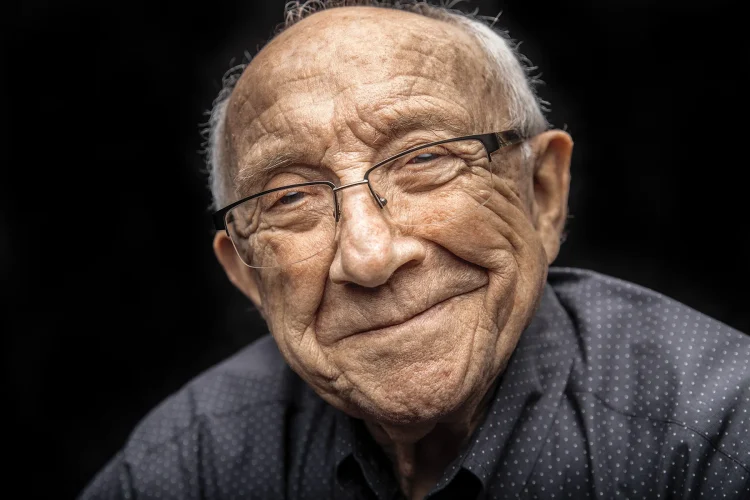
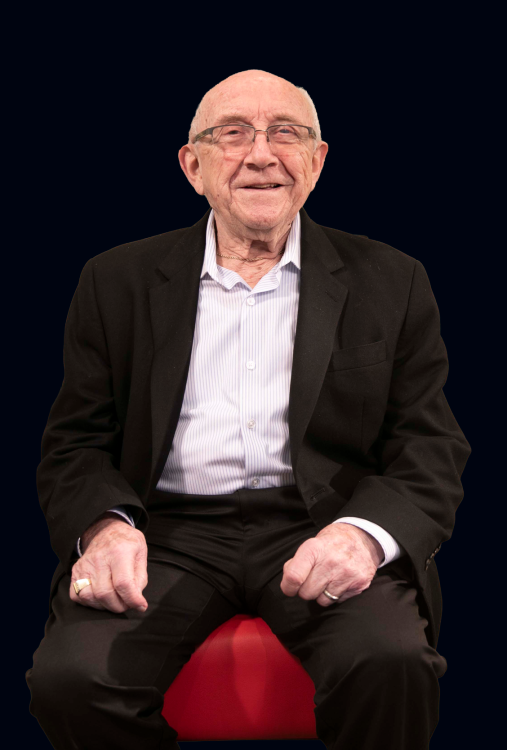
Max was also deeply connected to March of the Living. He travelled to Poland with students, sharing his testimony at the sites where his own history unfolded. His return journeys helped him confirm his memories, strengthen his commitment to education, and pass his story directly to younger generations.
In 2018, Max was filmed by USC Shoah Foundation for Dimensions in Testimony, an interactive biography project that allows future generations to ask questions and receive answers drawn from pre-recorded survivor testimony. His interactive testimony is featured at the Dallas Holocaust and Human Rights Museum, where visitors can continue to encounter his voice and story.
Max’s life and message were also preserved in the biography The Upstander: How Surviving the Holocaust Sparked Max Glauben’s Mission to Dismantle Hate, written by Jori Epstein and published in 2021. The book reflects Max’s lifelong mission to transform memory into action, teaching others to stand against hate, antisemitism, prejudice, and indifference.
Max Glauben passed away in Dallas on April 28, 2022, at the age of 94. The date was Yom HaShoah, Holocaust Remembrance Day. His legacy continues through his family, his testimony, the Dallas Holocaust and Human Rights Museum, March of the Living, USC Shoah Foundation, Dimensions in Testimony, and the countless students and educators who heard him speak.
Through the March of the Living Digital Archive Project, Max Glauben’s testimony remains part of a larger effort to preserve survivor memory for future generations. His story connects the Warsaw Ghetto, Majdanek, forced labour, liberation, rebuilding, and education into one enduring message: do not create the same hatred that was done to us.
Featured MOLDAP Vignettes
Max Glauben – Don’t Create the Same Hatred that was Done to Us
A MOLDAP survivor vignette preserving Max’s message against hatred and prejudice.Max Glauben — Majdanek Barracks / Shoes “A Sacred Place”
A survivor vignette connected to Majdanek, where Max’s mother and younger brother were murdered.
MOLDAP/USC Shoah Foundation: 360 On-Location Testimony
02 4 MAJDANEK BARRACKS 52 MONO
Max Glauben 02 2 MAJDANEK ADMIN ENTERING MONO
Max Glauben 02 3 MAJDANEK ADMIN STANDING INTERVIEWER MONO
Max Glauben 02 5 MAJDANEK BARRACKS 52 INTERVIEWER MONO
Max Glauben 02 6 MAJDANEK BARRACKS 52 INTERVIEWER MONO
Max Glauben 02 7 MAJDANEK MAUSOLEUM MONO
Max Glauben 02 8 WARSAW GHETTO MILA MONO
Max Glauben 02 9 WARSAW GHETTO MURANOWSKA MONO