

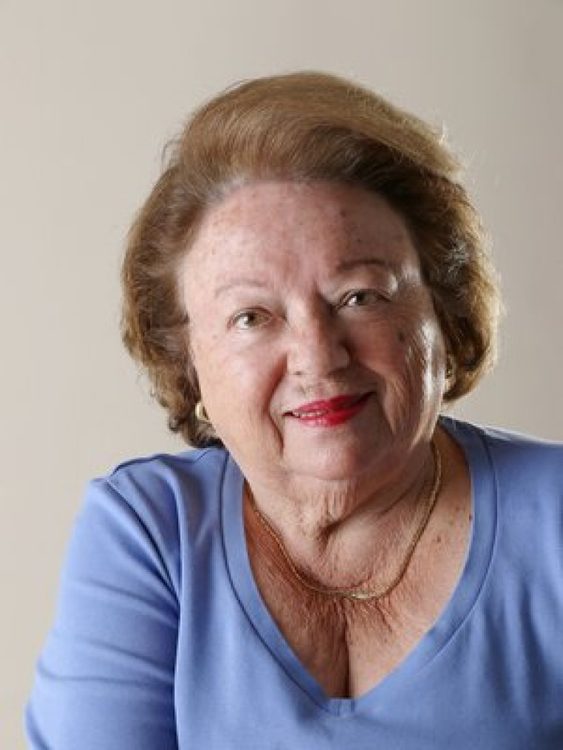
Holocaust Survivor, Hidden Child, Author, Educator, and March of the Living Witness
Anita Helfgott Ekstein was born on July 18, 1934, in Lwów, Poland (now Lviv, Ukraine), to Edzia and Fischel Helfgott. An only child in a close-knit Jewish family, she spent her early years in Synewódzko, where her father worked as an accountant. Her childhood was disrupted by the outbreak of the Second World War in September 1939, when eastern Poland came under Soviet occupation. In 1941, following the German invasion of the Soviet Union, Nazi persecution brought increasingly severe restrictions on Jewish families, and Anita and her parents were forced into the Skole ghetto.
In October 1942, Anita’s mother was seized during a roundup and subsequently murdered at the Bełżec extermination camp. Her father, desperate to save his eight-year-old daughter, turned to Josef Matusiewicz, a Polish Catholic man he had met while working on the construction of a railway bridge. Although Josef barely knew the family, he agreed to risk his own life and his family’s to rescue Anita.
One night, Josef entered the ghetto and carried Anita out concealed inside a large sack. He brought her to his home, where his wife, Paulina and daughter, Emilia, helped care for her. Anita was given a new identity and taught Catholic prayers and customs to conceal her Jewish background. She was introduced to neighbours as an orphaned relative, while the Matusiewicz family lived with the constant fear that someone might discover her identity.
In February 1943, Ukrainian police arrived at the Matusiewicz home, apparently following a denunciation. Anita narrowly escaped discovery when Emilia helped her flee through a window and hide in the bushes. With the danger of discovery growing, Anita was temporarily returned to her father, who was living among Jewish forced labourers. During the day, while he was away at work, Anita remained hidden inside a wardrobe.
Unable to bear the child’s suffering, Josef Matusiewicz intervened a second time. He obtained false identification papers for Anita under the name Anna Jaworska and arranged for her to live with his nephew, a Catholic priest in Liczkowce, near the former Polish-Soviet border. There she continued to live under an assumed Christian identity, protected from those who might expose her as Jewish.
Anita survived the war, but both her parents had been murdered. Her father died in 1943, and she never saw him again after Josef arranged her second rescue. When Soviet forces reached the region in 1944, Anita was eventually reunited with the Matusiewicz family, who continued caring for her as the war drew to a close.
In April 1946, Anita was reunited with her aunt Sala, who had survived the Holocaust through Oskar Schindler’s efforts. Leaving the people who had protected and raised her during the war was emotionally difficult. After spending time in postwar Poland, Anita and her aunt travelled to Paris in 1946, hoping eventually to join relatives in the United States. Instead, in 1948, they immigrated to Canada and settled in Toronto. Anita was fourteen years old.
In Canada
Anita gradually rebuilt her life, supported by the Toronto Jewish community and organizations assisting Holocaust survivors. She married, raised three children, and became involved in charitable and communal activities, including volunteering with Meals on Wheels, Baycrest, and the United Jewish Appeal. After the interruption of her schooling during the Holocaust and the challenges of beginning a new life in Canada, she eventually returned to higher education. In 1985, at the age of fifty-one, she graduated from York University, fulfilling a long-held personal ambition.
The courage of Anita’s rescuers was formally recognized in 1998, when Yad Vashem honoured Josef and Paulina Matusiewicz and their daughter Emilia Młot as Righteous Among the Nations. Anita maintained a lasting relationship with the family whose extraordinary actions had saved her life, returning to Poland and preserving the memory of their compassion and bravery.
Although Anita had survived the Holocaust as a child, it was not until later in life that she began speaking publicly about her experiences. In 1988, she attended the Toronto trial of Holocaust denier Ernst Zündel. Confronted with the denial of events she had personally experienced, Anita became determined to share her testimony and educate younger generations about antisemitism, racism, and the consequences of hatred.
Anita subsequently became a dedicated Holocaust educator, speaking to thousands of students in schools and community programs across Canada. She also established a Toronto group for child survivors and hidden children, helping others who had experienced the Holocaust during childhood connect through their shared histories. Her educational work has emphasized not only the importance of remembering those who were murdered, but also the courage of rescuers who refused to remain bystanders.
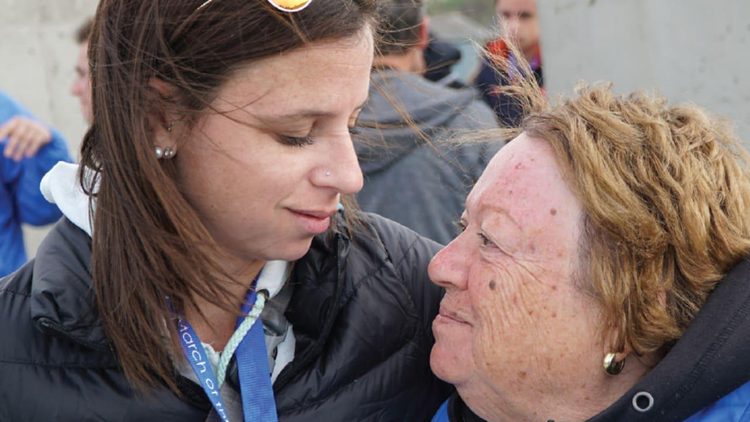
Anita has been especially connected with March of the Living, participating in eighteen journeys to Poland and Israel and serving as National Chair of March of the Living Canada. Through these experiences, she has shared her testimony with students at places connected to the destruction of European Jewry, including Bełżec, where her mother was murdered. For Anita, returning to these sites has been a deeply personal act of remembrance and an opportunity to encourage young people to carry the lessons of the Holocaust into the future.
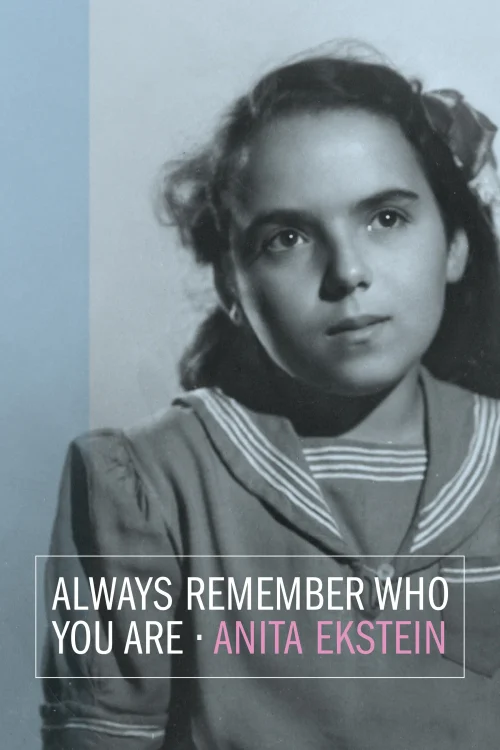
In 2019, Anita’s memoir, Always Remember Who You Are, was published through the Azrieli Foundation’s Holocaust Survivor Memoirs Program. The book recounts her childhood in Poland, the loss of her parents, her rescue by the Matusiewicz family, the challenges of living under a false identity, and her postwar struggle to reconnect with her Jewish identity. Its title reflects the lasting importance of her father’s final message to her before their separation.
Anita’s testimony has also been preserved through the March of the Living Digital Archive Project. MOLDAP features recordings of her experiences as a hidden child, her reflections on the loss of her family at Bełżec, and her participation in Holocaust education programs. These recordings connect her personal story with the broader history of Jewish persecution, rescue, survival, and remembrance.
“I lived because of the Righteous Among the Nations.”
Through her memoir, educational work, March of the Living journeys, and MOLDAP testimony, Anita Ekstein has helped ensure that the experiences of hidden children and the courage of the Righteous Among the Nations remain part of Holocaust memory. Her life is a reminder that the decisions of individuals, even in times of extraordinary danger, can preserve not only a single life but the generations that follow.
Featured Media
Anita Ekstein – Saying Goodbye to My Mother in Bełżec (2005)
A MOLDAP Holocaust Survivor Vignette in which Anita reflects on the loss of her mother at Bełżec during a March of the Living journey.
Anita Ekstein – I Was a Hidden Child
A MOLDAP video featuring Anita’s testimony at a gathering of Holocaust survivors in Warsaw, Poland.
Anita Ekstein – Hidden Child Testimony to Multi-Faith Students
A video recorded by Naomi Wise featuring Anita sharing her experiences of survival and rescue with a group of students from different religious backgrounds.
Crestwood Oral History Project – Testimony Segments
1. The War Begins; Taken to the Ghetto
Anita discusses her early childhood, the beginning of the war, and the growing danger faced by Jewish families under Nazi occupation.
2. October 18; Anita’s Father Saves Her
A testimony segment describing her father’s efforts to arrange her rescue from the ghetto.
3. Josef’s Second Rescue; 1944
Anita recalls her rescue and the arrangements made to protect her under a false identity.
4. Back to the Polish Family; Close Calls
A testimony segment concerning the Matusiewicz family and the dangers surrounding Anita’s concealment.
5. Back to School; Leaving Poland
Anita reflects on the period following the war, her return to education, and her departure from Poland.
6. From Paris to Toronto; Holocaust Education
A testimony segment about Anita’s immigration to Canada, rebuilding her life, and her later commitment to Holocaust education.
Additional Media
Always Remember Who You Are – Azrieli Foundation Holocaust Survivor Memoirs Program
Anita Ekstein’s memoir, published in 2019, including an author profile and an excerpt describing her rescue from the ghetto.
https://memoirs.azrielifoundation.org/titles/always-remember-who-you-are
The Matusiewicz Family – Polish Righteous
A detailed historical account documenting the rescue of Anita Ekstein and the recognition of her rescuers as Righteous Among the Nations.
https://sprawiedliwi.org.pl/en/stories-of-rescue/story-rescue-matusiewicz-family